Classrooms today reflect the world children live in, and that world includes screens, devices, and digital learning tools. Even in early years settings, children are using technology for stories, games, and basic learning activities. It makes online safety an important topic for educators, but it must be introduced with care. Picture books offer one of the most effective and age appropriate ways to begin these conversations.
Young children learn best through stories. When ideas are presented through characters and familiar situations, children are more likely to listen, remember, and engage. Picture books allow educators to explore online safety without relying on rules or technical language. Instead, they create space for discussion, reflection, and shared understanding. This approach is especially valuable in early learning and primary classrooms.
One of the key benefits of using picture books is that they naturally support social emotional learning. Online safety is not only about knowing what not to do. It is also about understanding feelings, asking for help, and treating others with kindness. A story can show a character feeling unsure, making a careful choice, or turning to a trusted adult. These moments help children recognize similar situations in their own lives.
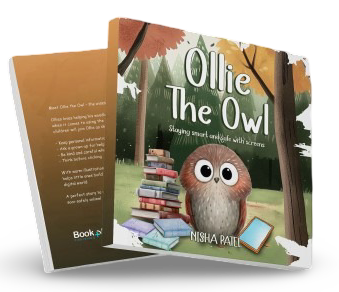
Nisha Patel’s book, Ollie the Owl: Staying Smart and Safe with Screens, is a strong example of how a picture book can be used in the classroom. Educators can read the story aloud and pause at key moments to ask simple questions. For example, when a character is unsure about clicking on something, a teacher might ask, What should they do next? It turns the story into a discussion starter that encourages children to think and respond.
The book can also be used as an activity prompt. After reading, teachers can invite children to draw a picture of someone they trust or act out asking a grown up for help. These activities reinforce the message that support is always available. Librarians and early learning professionals can use similar methods during story time to encourage participation and understanding.
As a social emotional learning resource, the story supports important classroom values. It promotes kindness, patience, and thoughtful choices. When Ollie encourages polite words and respectful behavior online, educators can link this to classroom rules about speaking kindly and listening to others. It helps children see that the same values apply both on and off screens.
Another advantage of using a book like this is its flexibility. It can be read during circle time, used in small group discussions, or shared during library sessions. Educators can revisit the story throughout the year, allowing repetition to strengthen understanding. Repeated exposure helps children feel confident and familiar with the ideas, rather than overwhelmed.
For educators looking to introduce online safety gently and effectively, picture books are a practical tool. They create a safe space for learning and conversation. Reading Ollie the Owl: Staying Smart and Safe with Screens by Nisha Patel can support teachers, librarians, and early learning professionals as they guide children toward safe and thoughtful digital habits.