When people think about online behavior, they often picture teenagers navigating social media or adults debating in comment sections. Rarely does the conversation begin with preschoolers. Yet children are interacting with digital tools earlier than ever. They play games, watch videos, send voice messages, and sometimes even join simple learning platforms. If technology is entering their world at this stage, then kindness online must begin there as well.
Preschool is when children learn foundational social skills. They practice sharing, taking turns, using polite language, and understanding how their actions affect others. These same principles apply in digital spaces. The difference is that a screen can create distance. Without facial expressions or tone of voice, words can feel harsher and misunderstandings can happen more easily. Teaching kindness online at an early age ensures that empathy grows alongside digital literacy.
Young children understand feelings before they understand technology. A simple question such as, “How would you feel if someone said that to you?” bridges the gap between the playground and the screen. When children grasp that real people exist behind digital messages, their behavior becomes more thoughtful. They begin to see that typing a message or sending a picture carries responsibility, just like speaking face to face.
Modeling is critical. Preschoolers observe how adults use devices. If they hear respectful communication and see calm responses to disagreement, they internalize those patterns. If they witness sarcasm, hostility, or impatience, they may replicate it. Kindness online is not taught only through instruction. It is reinforced through example. Families that treat digital communication with the same courtesy expected at the dinner table create consistent standards.
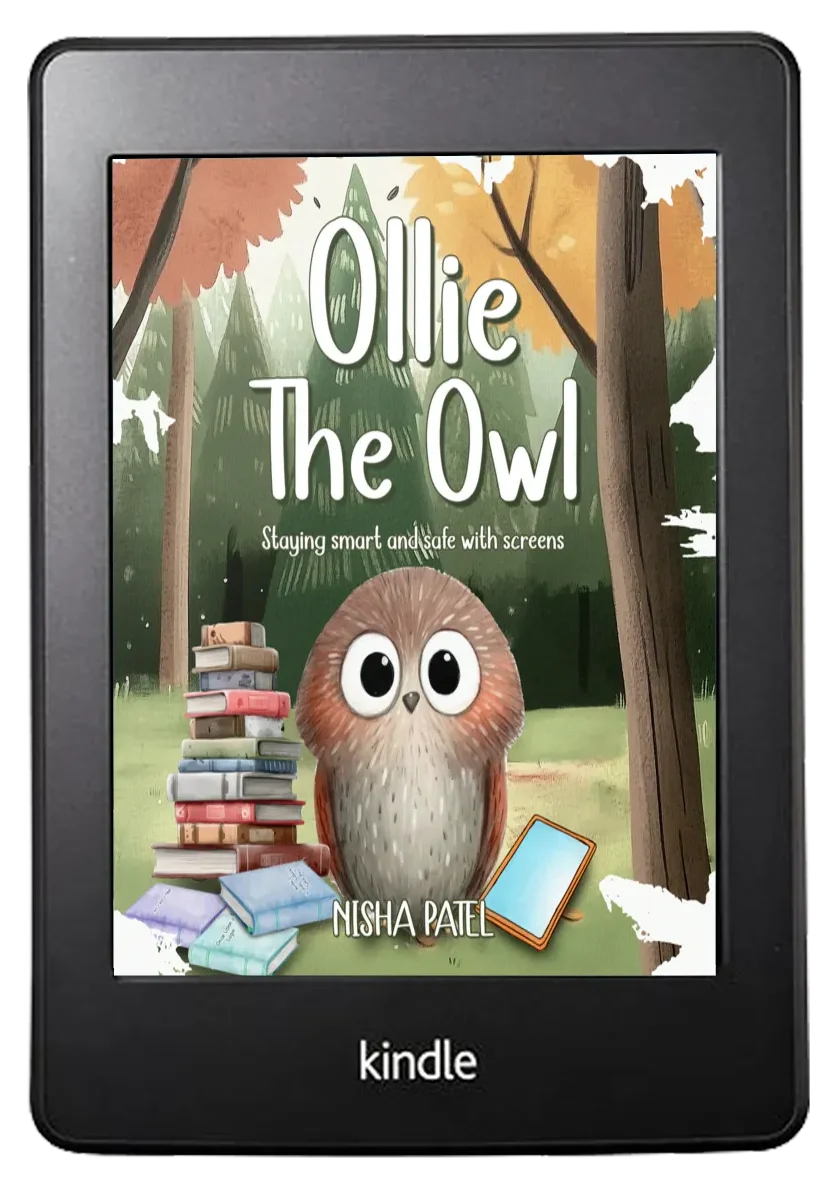
Stories are especially effective in shaping behavior at this age. Ollie the Owl: Staying Smart and Safe with Screens by Nisha Patel presents digital kindness through relatable characters and gentle guidance. Instead of framing technology as dangerous, the story emphasizes being wise, careful, and kind.
It is also important to address what children should do when they encounter unkindness. Even in early learning environments, children may receive messages or comments that confuse or upset them. Teaching them to tell a trusted adult immediately removes the burden of handling the situation alone. Silence can amplify distress. Clear guidance builds confidence. When children know that support is available, they are more likely to report problems early.
Another essential element is helping preschoolers understand permanence. While they may not grasp the technical details of data storage, they can understand that once something is sent, it cannot always be taken back. Explaining this in simple terms encourages pause before action. A brief moment of reflection can prevent impulsive behavior. Over time, this habit strengthens judgment.
Teaching kindness online in preschool is not about introducing complex rules. It is about reinforcing values already being taught in everyday life. Say please. Say thank you. Use gentle words. Ask for help when unsure. These principles transfer naturally to digital interactions. When parents and educators make that connection explicit, children begin to see technology as an extension of their social world rather than a separate realm with different standards.
As screens continue to shape childhood experiences, early guidance becomes increasingly important. Kindness does not automatically appear in digital spaces. It must be nurtured intentionally. By starting in preschool, families lay the groundwork for respectful communication that will carry into later years. Children who learn to combine empathy with technology grow into users who are not only smart and cautious, but also considerate and responsible.
Available On Amazon: https://www.amazon.com/dp/B0GTF6K8Z2/